
On 30 June 2026, the University of Westminster’s Marylebone Campus became a meeting place for practitioners, academics, and professional leaders committed to advancing the project management profession. This marked the 4th edition of the University of Westminster Project Management Day, which takes place annually on the last Tuesday of June, this year themed “Building the Bridge – Project Management in the Age of Uncertainty”. The event was jointly supported by the University of Westminster, the Project Management Institute (PMI) United Kingdom Chapter, the Association for Project Management (APM), and the Agile Business Consortium. The symposium provided a high-level forum for exploring one of the defining challenges facing organisations today: how to deliver successful projects in a world characterised by accelerating technological change, geopolitical instability, economic volatility, and ever-increasing stakeholder expectations. Throughout the day, a consistent message emerged: while uncertainty has become the defining characteristic of modern project environments, the project management profession has never been better equipped to respond, provided it continues to embrace innovation, ethics, agility, and lifelong learning.
With a long-established reputation for academic excellence, executive education and strong engagement with industry, the University of Westminster continues to demonstrate its commitment to preparing the next generation of project professionals while supporting the continuing development of experienced practitioners.
The programmes offered include:
Postgraduate Programmes
- Project Management MSc – Duration: 1 Year
- Construction Project Management – Duration: 1 Year
Professional Short Courses
- APM Project Management Fundamentals (PFQ)
- APM Project Management Qualification (PMQ)
- Agile Project Management Certification – Foundation
- Agile Project Management Certification – Practitioner
- PRINCE2 Certification – Foundation
- PRINCE2 Certification – Practitioner
Learn more at https://www.westminster.ac.uk/course-search?course=project+management
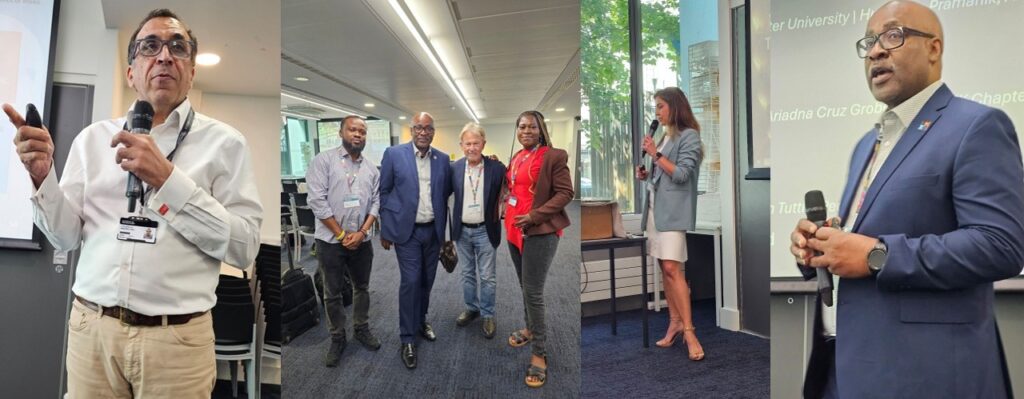
The day’s programme was carefully designed to balance strategic insight, practical experience and opportunities for networking, enabling participants not only to learn from internationally recognised experts but also to exchange ideas with fellow practitioners from diverse industries. The symposium commenced with a warm welcome from Dr Walaa Bakry, Director of Executive Education at Westminster Business School and Chair of the event. Dr Bakry welcomed delegates on behalf of the University, emphasising that project management has become one of the most strategically important professions in today’s economy. Organisations increasingly rely upon projects not merely to deliver products or services, but to implement strategic change, respond to disruption and create sustainable value. Drawing upon more than three decades of experience in higher education, executive learning and international collaboration, Dr Bakry highlighted the importance of strengthening the links between universities, professional institutions and industry. He observed that developing future project leaders requires much more than technical education; it demands critical thinking, ethical judgement, global awareness and the ability to lead organisations through continuous transformation. Dr Bakry himself embodies this multidisciplinary perspective. With over thirty years’ experience in higher education, leadership and executive learning, he has contributed extensively to executive education, consultancy and international collaborations throughout the United Kingdom, Europe and the Middle East. His work spans project management, digital learning and organisational development. He has published and edited numerous works in project management, e-learning and information systems, and is a Chartered Fellow of the British Computer Society (FBCS), Fellow of the Royal Economic Society (FREcon), Senior Fellow of the Higher Education Academy (SFHEA), and an accredited PRINCE2 trainer holding qualifications including PMQ, MSP, MoR and Scrum. His welcoming remarks established the central theme that would resonate throughout the symposium: in an age defined by uncertainty, project managers are increasingly becoming architects of resilience and enablers of organisational success.
The keynote address was delivered by Ike Nwankwo, Chair of the Project Management Institute (PMI) Board of Directors, whose engaging presentation immediately captivated the audience. Renowned for his outstanding communication skills, Ike demonstrated why he is considered one of the profession’s most effective ambassadors, combining compelling storytelling with robust research and practical insights. With over twenty-five years of international experience leading portfolios, programmes and major transformation initiatives across information technology, construction and business transformation, Ike has consistently championed the advancement of project management worldwide. Alongside his role as Managing Director of Distinct Management Ltd, he has held numerous leadership positions within PMI, including President of the PMI Nigeria Chapter and PMI Region Mentor for Africa, contributing significantly to the global growth of the profession. Rather than simply presenting statistics, Ike painted a vivid picture of a truly global professional community. Today, PMI comprises approximately 800,000 members across more than 200 countries, supported by around 18,500 volunteers working through 299 Chapters worldwide. More significantly, more than 1.9 million active PMI certification holders are helping organisations deliver better outcomes every day.
These figures, however, were not presented as an end in themselves. Instead, Ike used them to illustrate PMI’s overarching mission: “to maximise project success in order to elevate our world”. This simple yet powerful statement became the thread connecting every aspect of his presentation. Ike challenged the audience to think beyond traditional perceptions of project management. Projects, he argued, are not simply mechanisms for delivering products, infrastructure or software. They are the means through which societies solve problems, governments implement policy, organisations transform themselves and communities improve people’s lives. He reminded delegates that while strategy defines what organisations wish to achieve and why they wish to achieve it, projects determine how those ambitions become reality.
“If strategy defines the destination, projects build the road.” This distinction highlights why project management has become indispensable in every sector of the economy. Whether introducing artificial intelligence, improving healthcare, constructing sustainable infrastructure or responding to humanitarian crises, successful projects transform ideas into measurable outcomes.
Simply put, the future is built through projects.
A major focus of the keynote concerned the unprecedented complexity now facing project professionals. Technology evolves faster than ever before. Artificial Intelligence is reshaping industries. Digital transformation is accelerating organisational change. Supply chains have become global and interconnected. Projects involve increasingly diverse stakeholder groups operating across multiple countries, cultures and regulatory environments. Political instability, economic uncertainty and changing legislation continuously reshape delivery environments. Leadership responsibilities have expanded, requiring project managers to exercise greater strategic judgement while balancing competing interests.
These interconnected drivers have fundamentally altered the project landscape. Project managers today must no longer view complexity as an exception. Complexity has become the normal operating environment. Consequently, successful project leaders require broader capabilities than ever before, combining technical excellence with strategic thinking, communication, leadership and adaptability. One of the keynote’s most striking messages concerned the future workforce. PMI research projects that by 2035 the global economy could face a shortage of approximately 26 million project professionals. Ike emphasised that this is not simply a talent shortage. It represents a delivery gap. Without sufficient skilled project professionals, organisations risk delaying innovation, slowing economic development and reducing their ability to respond effectively to future challenges. Consequently, investment in education, professional certification and continuous development has become not merely desirable but essential. Universities such as Westminster therefore have a vital role in developing the next generation of project leaders capable of addressing tomorrow’s increasingly complex projects. Ike described today’s environment as one of accelerated change and continuous disruption. Rather than experiencing occasional periods of transformation separated by stability, organisations now operate in permanent transition. Digital innovation continually reshapes business models. Artificial Intelligence introduces enormous opportunities while simultaneously creating uncertainty. Economic shocks, geopolitical tensions and environmental pressures demand ever greater organisational resilience. Project managers therefore need to become facilitators of organisational adaptability rather than simply managers of schedules and budgets. This changing context led naturally into one of PMI’s most significant recent initiatives.
For decades, project success has traditionally been measured through the so-called “iron triangle” of scope, schedule and budget. PMI’s latest global research challenges this narrow perspective. Drawing upon more than 10,000 participants, over 150 in-depth interviews, and responses to more than 55 research questions, PMI has developed a far richer understanding of what genuine project success actually means. The research demonstrates that projects should no longer be judged solely by whether they are delivered on time or within budget. Instead, true success occurs when a project delivers value that justifies the effort and expense invested. This broader definition recognises that some technically successful projects fail to generate meaningful organisational benefit, while others that encounter delivery challenges ultimately create transformational value.
The implications for project managers are profound. Success must be measured not only by execution, but also by outcomes. Ike then elaborated about what is perhaps the most significant evolution in contemporary project management thinking: the need to redefine project success itself. Drawing upon PMI’s extensive global research, he challenged delegates to move beyond traditional measures of performance and adopt a broader perspective centred on the delivery of lasting value.
At the heart of this new approach lies the MORE framework, a practical model designed to help project managers increase the likelihood that their projects will deliver genuine organisational and societal value. ather than concentrating exclusively on planning, cost control and delivery milestones, project leaders should embrace four complementary behaviours.
M – Manage Perceptions: Project success is experienced differently by different stakeholders. A technically flawless project may still be regarded as unsuccessful if expectations have not been managed or if communication has been inadequate.
Successful project managers therefore devote considerable attention to understanding stakeholder perspectives, and ensuring that expectations evolve alongside changing project realities.
O – Own Project Success Beyond Project Management Success: Ike encouraged project professionals to move beyond the traditional mindset of “delivering the project” and instead take ownership of the business outcomes the project is intended to achieve.
R – Relentlessly Reassess Project Parameters: In today’s volatile environment, assumptions can become obsolete within weeks, or even days. Political developments, technological innovation, changing customer expectations and economic events continually reshape project environments.
Consequently, successful project managers regularly revisit assumptions, priorities, risks, schedules and expected benefits rather than treating the original project plan as immutable.
Adaptive thinking has become an essential professional competency.
E – Expand Perspective
Finally, project managers must broaden their view beyond their own project boundaries.
Understanding wider business objectives, sustainability goals, customer needs and long-term organisational strategy enables better decisions throughout the project lifecycle.
Projects should therefore be seen not as isolated activities but as contributors to organisational transformation.
An interesting findings presented during the keynote was the measurable impact of adopting the MORE framework. According to PMI’s research, organisations practising all four elements consistently achieved dramatically higher levels of project success. Projects applying the complete MORE approach increased overall success rates from approximately 27% to as high as 88%. Perhaps even more surprising was another research finding. Only 7% of project professionals worldwide currently demonstrate all four MORE behaviours consistently. This represents both a challenge and a tremendous opportunity for the profession. If more organisations embrace these principles, the potential improvement in project outcomes could be transformational. Ike also highlighted another important conclusion emerging from PMI’s research: the continuing importance of what he described as the “measurement trifecta.”
Projects are significantly more likely to succeed when organisations consistently establish meaningful measures relating to:
- project performance,
- expected business outcomes,
- and realised organisational value.
Measurement should not be viewed merely as a reporting requirement but as a strategic management tool that guides decision-making throughout the project lifecycle.
Closely related to this was the encouraging evidence that projects explicitly supporting sustainability and social good tend to achieve higher levels of success than projects focused solely on financial objectives.
This finding reflects the growing expectation that projects should contribute positively not only to organisational performance but also to wider society.
The keynote concluded with a reminder that technical competence alone is no longer sufficient.
PMI’s well-established Talent Triangle continues to provide the foundation for professional development through three complementary capability areas:
- Ways of Working
- Power Skills
- Business Acumen
Modern project managers must combine technical expertise with leadership capability, emotional intelligence, strategic thinking and commercial awareness. These competencies enable professionals not simply to manage projects, but to influence organisations. As Ike brought his presentation to a close, he left delegates with a definition that perfectly encapsulated the day’s overarching message: A project is truly successful when the value it delivers exceeds the effort and expense required to achieve it. It was an inspiring keynote that successfully combined rigorous research, practical guidance and visionary leadership, setting an exceptionally high standard for the remainder of the symposium.
Following the keynote, delegates welcomed one of the world’s foremost authorities on strategic project management, Professor Darren Dalcher, Professor in Strategic Project Management at Lancaster University Management School and Founder and Director of the National Centre for Project Management. Professor Dalcher is internationally recognised for his ability to bridge academic research with professional practice. Having authored more than 300 papers and over 30 books, and recognised among the world’s leading project management thinkers, he has consistently challenged the profession to think more deeply about the broader implications of project leadership. His presentation focused on a subject that is sometimes overlooked amid discussions of methodologies, technologies and delivery frameworks: ethics.
Professor Dalcher argued that ethical behaviour is not simply a matter of complying with professional codes or organisational policies. Rather, ethics underpins every decision a project manager makes, from allocating resources and managing stakeholders to reporting progress and responding to unexpected challenges. Projects rarely unfold exactly as planned. Unexpected pressures may tempt individuals to manipulate reporting, conceal problems, shift responsibility or prioritise short-term gains over long-term value. It is in these moments that ethical leadership becomes most important. He observed that trust is one of the most valuable assets any project manager possesses. Once lost, it is exceptionally difficult to regain. Ethical behaviour therefore strengthens relationships not only within project teams but also between organisations, customers, suppliers and society. Professor Dalcher also explored the increasing responsibility of project professionals in an era dominated by artificial intelligence, sustainability, data privacy and global uncertainty. Many decisions now carry significant social consequences extending well beyond the immediate project environment.
Ethical leadership requires courage, transparency, accountability and a willingness to challenge decisions that may compromise professional integrity. His presentation reinforced the idea that successful organisations are built not simply on effective governance but on cultures where ethical behaviour is consistently encouraged and rewarded.
Representing the Association for Project Management, Humayon Pramanik, Director of Influence and Advocacy, shifted the discussion towards one of the defining characteristics of modern organisations: uncertainty. Drawing upon his extensive experience in communications, strategic engagement and professional advocacy, Humayon emphasised that uncertainty should no longer be regarded as an occasional disruption to normal business. It has become the permanent operating environment. Technological innovation, geopolitical events, changing customer expectations, environmental pressures and economic volatility continuously reshape organisational priorities. In such circumstances, detailed long-term plans alone cannot guarantee success. Instead, organisations require adaptive leadership capable of responding intelligently to evolving circumstances.
Humayon distinguished carefully between risk and uncertainty. Risks can generally be identified, analysed and managed using established methodologies. Uncertainty, however, concerns the unknown, the issues that cannot yet be predicted. Managing uncertainty therefore demands flexibility, resilience and continuous learning. Project managers increasingly need to create environments where teams feel confident challenging assumptions, experimenting with new ideas and adapting rapidly as circumstances evolve. Rather than viewing change as a threat, successful organisations learn to treat it as an opportunity for innovation. He also highlighted the growing importance of communication during periods of uncertainty. Transparent communication strengthens trust, reduces anxiety and enables stakeholders to make informed decisions even when complete information is unavailable.
Ultimately, Humayon reminded delegates that resilience is not built during periods of stability but developed through successfully navigating disruption. The programme continued with an engaging presentation by Richard Campbell, Product Engagement Lead at the Agile Business Consortium. Drawing on his extensive experience in the advanced technology sector, including communications, defence, finance and transportation, Richard explored how organisations can move beyond simply doing Agile to truly being Agile. He began by observing that many organisations have successfully adopted Agile practices such as iterative delivery, sprint planning and regular retrospectives, yet continue to struggle because they have not embraced the underlying principles of Agile leadership. Genuine agility, he argued, is not defined by ceremonies or frameworks but by a mindset that empowers people, encourages collaboration and enables rapid adaptation in response to change. Richard emphasised that Agile leaders create environments where multidisciplinary teams are trusted to make decisions close to the work, while maintaining a clear focus on delivering value to customers and stakeholders. In an age of uncertainty, leaders must replace rigid command-and-control approaches with transparency, shared ownership and continuous learning.
He also highlighted several principles that distinguish high-performing Agile organisations:
- placing customer value at the centre of decision-making;
- encouraging experimentation and learning from failure;
- empowering teams through trust rather than excessive control;
- embracing incremental delivery and continuous improvement;
- maintaining the flexibility to respond quickly to changing priorities; and
- fostering collaboration across organisational boundaries.
Rather than seeing agility as a destination, Richard described it as an ongoing organisational capability. Businesses that cultivate this capability are better positioned to respond to technological disruption, shifting market demands and unexpected external events.
His presentation reinforced a recurring theme of the symposium: in today’s environment, adaptability is no longer a competitive advantage, it is a prerequisite for sustained success.
The afternoon sessions of the symposium shifted the focus from organisational agility to two of the most significant forces reshaping contemporary project management: geopolitical instability and artificial intelligence. Together, these presentations demonstrated that tomorrow’s project leaders will require capabilities extending far beyond traditional planning and control techniques. They must be capable of navigating uncertainty at both the global and technological levels.
Dr Walaa Bakry delivered one of the most timely and strategically relevant presentations of the symposium. His session, “International Projects: Managing Political Risks in a Turbulent World,” examined how the changing geopolitical landscape is fundamentally altering the way international projects are conceived, planned and delivered. Only a few years ago, geopolitical considerations were often regarded as external influences to be considered primarily by governments and multinational corporations. Today, they have become central concerns for virtually every organisation engaged in international business. Conflicts, sanctions, trade disputes, shifting alliances, cyber threats, energy security and supply chain disruptions now affect projects of every size and sector. Dr Bakry began by observing that the international operating environment has become increasingly volatile and interconnected. A political event occurring thousands of miles away can rapidly disrupt procurement, delay transportation, affect currency exchange rates or alter regulatory requirements. Consequently, project managers must broaden their perspective beyond the immediate boundaries of their projects and develop a more sophisticated understanding of the external environment. He challenged delegates to reconsider the traditional concept of risk management. While project managers have long been accustomed to identifying technical, financial and operational risks, geopolitical risk often evolves more rapidly, is less predictable and may have consequences extending across the entire project lifecycle. Political instability, international tensions and economic sanctions can interrupt critical supply chains, restrict access to technology, increase costs and significantly delay project delivery. Increasingly, project managers are required to anticipate such developments rather than merely react to them. One of the key messages of the presentation was that geopolitical awareness should become a core professional competence rather than a specialist skill reserved for international organisations. Projects can no longer be viewed in isolation from their global context.
Whether delivering infrastructure, implementing digital transformation or managing multinational programmes, project leaders must understand how political developments may influence procurement strategies, investment decisions, contractual relationships and stakeholder engagement. Dr Bakry argued that effective international project management requires organisations to move beyond conventional risk registers towards the development of genuine organisational resilience. Rather than attempting to predict every possible event, project teams should create delivery models capable of adapting quickly as circumstances change. Scenario planning was presented as one of the most valuable tools available to modern project managers. Instead of relying upon a single forecast, organisations should prepare for multiple possible futures by considering different political, economic and regulatory scenarios. Such an approach enables decision-makers to identify vulnerabilities early and develop contingency plans before crises emerge.
Closely linked to this was the importance of strengthening supply chain resilience. Recent global events have demonstrated how dependent many projects have become upon complex international supply networks. Shortages of critical materials, transportation delays, export restrictions and geopolitical tensions have highlighted the need for greater diversification and flexibility. Dr Bakry encouraged organisations to review supplier strategies, develop alternative sourcing arrangements and reduce excessive dependence upon single regions or individual suppliers.
Another major theme concerned the increasing convergence between geopolitical risk and cybersecurity. As organisations accelerate digital transformation, project delivery becomes increasingly dependent upon digital infrastructure, cloud services and interconnected information systems. These technologies undoubtedly create significant opportunities but also introduce new vulnerabilities. Cyberattacks now have the potential to disrupt project operations, compromise sensitive information and undermine stakeholder confidence. Consequently, cybersecurity can no longer be regarded solely as a technical issue delegated to IT departments.
Project managers themselves must understand cyber risks sufficiently to incorporate digital resilience into planning, governance and decision-making throughout the project lifecycle. A valuable aspect of Dr Bakry’s presentation was his discussion of the capabilities that tomorrow’s project professionals will require.
He identified five essential competencies that will increasingly distinguish successful international project leaders:
- Geopolitical Awareness, enabling project managers to understand the wider political and economic context in which projects operate.
- Scenario Planning, allowing organisations to prepare for multiple possible futures rather than relying upon fixed assumptions.
- Supply Chain Resilience, ensuring continuity despite disruption to international markets.
- Digital and Cyber Resilience, protecting projects against rapidly evolving technological threats.
- Adaptive Leadership, enabling teams to remain effective despite uncertainty, ambiguity and continuous change.
These competencies complement rather than replace traditional project management skills. Scheduling, budgeting and governance remain essential, but they must now be integrated with broader strategic capabilities that reflect today’s increasingly complex operating environment.
Dr Bakry concluded by reminding delegates that uncertainty should not be viewed solely as a threat. Organisations that develop resilient leadership, flexible governance and adaptive cultures are often better positioned to seize emerging opportunities than competitors constrained by rigid planning and inflexible decision-making. His presentation elegantly connected many of the themes introduced during the morning sessions, reinforcing the symposium’s central message that successful project management increasingly depends upon resilience, adaptability and strategic awareness.
Following a short coffee break, delegates returned for a presentation on one of the most transformative forces currently reshaping organisations worldwide: Artificial Intelligence.
The session “AI-Powered Digital Transformation: Redefining Modern Leadership” was delivered by Ariadna Cruz Groberio, widely recognised for her leadership in project and programme management and her pioneering work in artificial intelligence, digital innovation, and strategic governance. With over twenty-five years of experience leading complex transformation initiatives, she serves as Marketing Director of the PMI UK Chapter, has contributed to PMI’s Global Standards for Artificial Intelligence, and is currently a Project Manager at Microsoft, combining hands-on delivery experience with thought leadership in digital transformation.
Ariadna opened by stressing that discussions on AI too often focus narrowly on technology, when the real issue is leadership. Artificial intelligence is not simply introducing new tools; it is reshaping how organisations make decisions, manage knowledge, communicate, and innovate. As a result, successful transformation depends less on technology itself and more on leaders capable of guiding people through significant organisational change. AI, she argued, should be seen as an enabler of human capability rather than a replacement for human judgement. Routine tasks, repetitive reporting, and administrative processes are increasingly being automated, freeing project professionals to focus on strategic thinking, stakeholder engagement, and value creation. Rather than diminishing the role of project managers, AI is elevating it. Future project leaders will spend less time gathering data and more time interpreting it, translating insights into action and outcomes.
A key message of the presentation was that digital transformation is never purely a technology initiative. Organisations often invest heavily in advanced systems but fail to achieve expected benefits because insufficient attention is paid to culture, communication, and change management. Successful transformation requires alignment between technology, people, processes, and strategy. Employees need clarity on why change is happening, how it affects their work, and how they can contribute. Trust, transparency, and continuous learning are therefore essential. AI, she emphasised, cannot replace empathy, leadership, or organisational culture, which remain fundamentally human responsibilities. Drawing on her involvement in PMI’s global standards work on AI, Ariadna also highlighted the growing importance of ethical considerations. As organisations increasingly rely on intelligent systems for decision-making, project professionals must ensure transparency, accountability, and fairness. AI should strengthen, not undermine, trust. This places a governance responsibility on project managers to ensure compliance with legal, ethical, and organisational standards, including issues of privacy, security, and bias.
In closing, Ariadna described how the project management profession itself is evolving. Tomorrow’s project managers will go beyond scheduling and budget control to become strategic integrators of technology, business strategy, innovation, and human leadership. Success will depend increasingly on curiosity, adaptability, emotional intelligence, and the ability to foster collaboration between people and intelligent systems. Artificial intelligence will undoubtedly transform the profession. However, the most successful organisations will not necessarily be those with the most advanced technology, but those that develop leaders capable of using it wisely, ethically, and strategically.
The final presentation of the day brought the symposium full circle. After exploring leadership, ethics, uncertainty, agility, geopolitical risk and artificial intelligence, delegates were invited to reflect on a deceptively simple yet fundamental question: What does project success really mean? It was a fitting conclusion to a day that had consistently challenged conventional thinking and encouraged professionals to look beyond traditional performance measures.
The session “When Success Fails: Turning Activity into Strategic Impact” was delivered by Susan Tuttle, Senior PRINCE2 Product Architect at PeopleCert and author of PRINCE2® Project Management In Action. Responsible for shaping the future evolution of PRINCE2, Tuttle brought extensive experience from financial services, global technology organisations and entrepreneurship, offering a practical perspective on organisational change and delivery. She opened with a striking observation: organisations often celebrate projects delivered precisely as planned, on time, within budget and to specification, only to discover months later that they generated little lasting benefit. Conversely, some delayed or significantly adjusted projects ultimately transformed organisations and created exceptional value. This apparent paradox raises an uncomfortable question: Can a project be managed successfully and still fail? Her answer was unequivocal: yes. Technical delivery and strategic success are not always synonymous.
Tuttle urged delegates to distinguish activity from impact. Organisations devote enormous attention to monitoring milestones, budgets, reports, governance meetings, risks and schedules. These are important, yet they merely indicate that work is being performed; they do not prove that meaningful organisational value is being created. True success should be measured by the difference work makes. Has customer satisfaction improved? Have operational costs been reduced? Has patient care improved? Has productivity increased? Has organisational capability been strengthened? These outcome-focused questions, illustrated through banking and NHS examples, are what separate outputs from genuine success. She further observed that organisations consistently recognised for successful transformation share common traits. Firstly, they maintain a relentless focus on benefits throughout the lifecycle, reviewing them continuously rather than only at initiation and closure. Secondly, governance extends beyond monitoring cost and schedule; leadership teams regularly ask whether projects continue to support strategic objectives. Thirdly, these organisations encourage open communication, enabling project teams to report emerging issues honestly without fear that transparency will be interpreted as failure. Fourthly, they view adaptability as a sign of maturity. Changing direction in response to new information frequently demonstrates good leadership, not poor planning.
An important takeaway was separating progress from relevance. A project can make excellent progress while simultaneously becoming less relevant to shifting organisational priorities. Conversely, pausing to reconsider objectives, adjust scope or revise delivery approaches may increase strategic value. In an era characterised by rapid technological innovation and geopolitical uncertainty, maintaining strategic relevance matters far more than blindly adhering to an outdated plan. This message echoed themes explored throughout the day. Planning, discipline and governance remain essential, but none should prevent organisations from adapting intelligently as circumstances evolve.
When the formal presentations concluded, delegates gathered once again for networking over light refreshments. Conversations continued enthusiastically across the Marylebone Campus as participants reflected upon the remarkable breadth of ideas shared throughout the day. As delegates departed the Marylebone Campus, Dr Bakry thanked all attendees and invited them to reconvene for the next University of Westminster Project Management Day on 29 June 2027.
Franco Guarrella, President PMI UK Chapter