
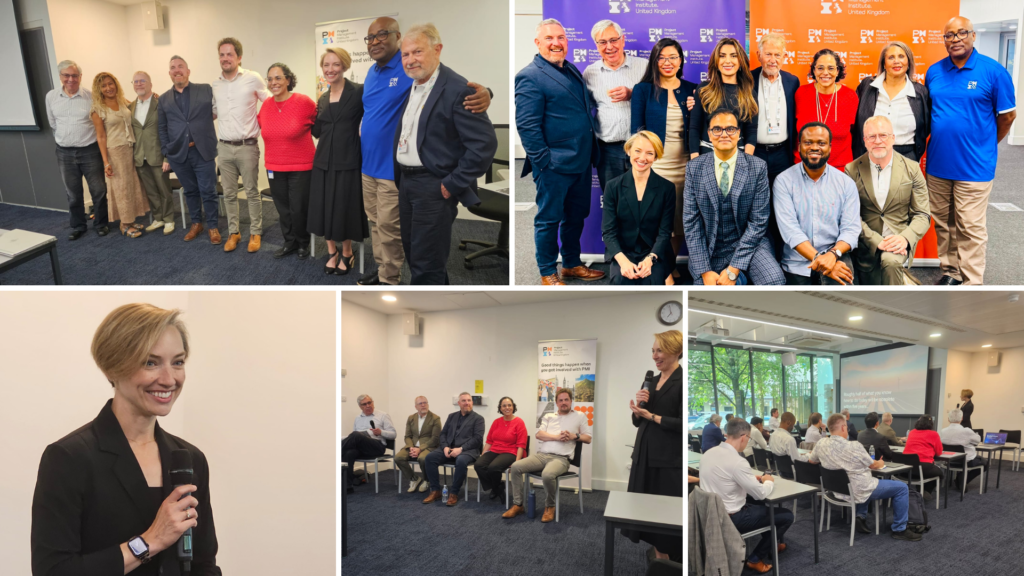
On 27 May 2026, the PMI UK Chapter hosted an inspiring and highly relevant professional event titled “Lifelong Learning as a Strategy: Thriving in the Era of Intelligent Transformation” at the University of Westminster in London.
The event itself originated from a valuable collaboration within the PMI global community. Fabiana Mei, PMI Chapter Engagement Specialist for South West and North Atlantic Europe, informed me, as President of the PMI UK Chapter, that Dr. Kelly Heuer, PMI Vice President of Learning, would be visiting London from New York, where she resides.
Recognising the unique opportunity to bring such an influential PMI leader to the UK professional community, Franco and Fabiana worked together to organise and shape this special event in honour of Dr. Heuer’s visit, creating an important occasion for learning, professional exchange, and community engagement.
The PMI UK Chapter would like to acknowledge the hospitality of the University of Westminster for hosting the event at its excellent central London location, providing an outstanding setting for dialogue, collaboration, networking, and professional exchange among practitioners, academics, and industry leaders.
The event represented a significant occasion for the PMI UK Chapter leadership team. I, together with five Board Directors of the PMI UK Chapter, travelled to London specifically for this special event, demonstrating the Chapter’s commitment to supporting professional development and lifelong learning initiatives across the United Kingdom.
Notably, none of the attending Board members are London-based, making the occasion even more meaningful in terms of dedication, collaboration, and service to the PMI community.
Bringing together project professionals, digital transformation leaders, academics, government representatives, and lifelong learners from across sectors, the event explored one of the defining challenges and opportunities of our time: how individuals and organisations can remain resilient, competitive, and future-ready in an era increasingly shaped by artificial intelligence, automation, and rapid technological change.
The evening opened with my welcoming remarks, highlighting the importance of continuous learning as a strategic capability for modern professionals and organisations alike.
In my introduction, I emphasised that project professionals today are expected not only to deliver successful outcomes, but also to lead transformation, manage uncertainty, foster innovation, and guide organisations through unprecedented complexity.
The keynote speaker for the evening was Dr. Kelly Heuer, Vice President of Learning at PMI, who delivered a compelling presentation on the strategic importance of lifelong learning in today’s rapidly evolving professional landscape.
Dr. Heuer brings more than two decades of experience in higher education, digital learning innovation, and professional development. Her career journey, from academia at Georgetown University to leadership roles at edX and now PMI, reflects a deep commitment to expanding access to learning and empowering professionals worldwide.
During her keynote, Dr. Heuer discussed how the accelerating pace of technological transformation is fundamentally changing the nature of work. Artificial intelligence, automation, and digital innovation are not only transforming industries but are also reshaping the skills and mindsets required for long-term career success.
She stressed that technical expertise alone is no longer sufficient. Instead, professionals must cultivate adaptability, curiosity, resilience, and a continuous-learning mindset in order to remain relevant and effective in a constantly changing environment.
One particularly inspiring aspect of Dr. Heuer’s presentation was her emphasis on learning as a lifelong journey rather than a one-time achievement. Drawing from both personal experience and global learning trends observed at PMI, she encouraged professionals to embrace continuous growth and remain open to new perspectives, technologies, and opportunities.
Following Dr. Kelly Heuer’s keynote presentation, the evening continued with a highly engaging and dynamic panel discussion moderated by Kelly herself. The panel brought together distinguished professionals from technology, government, academia, learning, and industry sectors, each contributing unique perspectives on leadership, digital transformation, project management, and the future of lifelong learning.
Giles Lindsay shared practical insights from decades of experience leading technology and AI-driven transformations at executive level, highlighting the importance of adaptive leadership and organisational agility in rapidly evolving business environments.
Jim Conley discussed the growing role of digital learning ecosystems and AI-enabled education platforms in helping professionals continuously reskill and remain competitive in changing labour markets.
Garé Avelar Aguinaga offered a valuable perspective from the global energy sector, reflecting on the importance of professional development frameworks, competency growth, and supporting project managers throughout every stage of their careers.
Paul Compton provided important insights from the UK government perspective, emphasising the strategic importance of capability development, leadership pipelines, and future-ready skills across major national programmes and transformation initiatives.
Dr. Nicholas Lambrou, Emeritus Fellow at University of Westminster, enriched the discussion with thoughtful reflections drawn from a lifetime in academia and international project work. His observations reinforced the human and societal dimensions of project management and leadership.
The panel discussion explored several important themes, including adaptability, resilience, ethical leadership, technological disruption, continuous professional development, and the evolving role of project managers as leaders of transformation.
Following the panel session, the audience actively participated in an engaging Question and Answer segment. Attendees raised thoughtful and relevant questions concerning artificial intelligence, future skills, leadership challenges, organisational learning cultures, certification pathways, and the impact of digital transformation on careers and workplaces.
The quality and depth of the audience interaction demonstrated both the high level of engagement in the room and the strong relevance of the evening’s theme within today’s professional environment.
As the formal discussions concluded, I returned to the stage to deliver my wrap-up remarks, reflecting on the many valuable insights shared throughout the evening and emphasising the importance of remaining open to learning, innovation, and continuous personal growth in a rapidly changing world.
During my closing remarks, I acknowledged the presence in the audience of a very special guest: Ike Nwankwo, Chair of the PMI Board, representing one of the highest levels of leadership and authority within the global PMI community.
At my invitation, Ike graciously agreed to share a few reflections with the audience. In an impromptu yet highly impactful two-minute intervention, Ike demonstrated his characteristic intelligence, wit, warmth, and exceptional communication skills. His remarks brilliantly synthesised the key themes discussed throughout the evening, reinforcing the strategic importance of lifelong learning, adaptive leadership, and the responsibility project professionals have in helping organisations and society navigate intelligent transformation.
His contribution was met with enthusiastic applause from the audience and provided a memorable and inspiring conclusion to the formal proceedings of the event.
I then returned for the final conclusion of the evening, warmly thanking Dr. Kelly Heuer for her outstanding keynote presentation, excellent moderation of the panel discussion, and meaningful contribution to the PMI UK Chapter community. I also expressed appreciation to all panelists, attendees, volunteers, and supporters who contributed to the success of the event.
Following the formal programme, all attendees moved to a separate reception hall where a standing networking buffet had been prepared. Guests enjoyed a generous selection of pizza, finger food, beer, wine, and prosecco, which proved extremely popular and greatly appreciated by everyone attending.
The informal reception created a vibrant and energetic atmosphere in which professionals from different sectors continued discussions initiated during the panel, exchanged experiences and ideas, developed new professional relationships, and strengthened existing connections.
For almost two hours, attendees engaged in lively conversations, networking, photographs, and informal exchanges in an atmosphere characterised by openness, collaboration, friendship, and professional curiosity.
The networking reception perfectly reflected the spirit of the evening: bringing people together not only to learn, but also to connect, collaborate, and build the professional relationships that support continuous growth and future success.
The PMI UK Chapter once again demonstrated its commitment to creating high-quality events that combine thought leadership, professional development, and meaningful community engagement for project professionals across the United Kingdom and beyond.
Franco Guarrella
President PMI UK Chapter